Saturday, June 23, 2012

Hyde Street Pier Maritime Museum - Back to the 1800's

 San Francisco of course has the famous cable cars, but they also have these cool street cars that run by electricity. Rick was interested in riding these, but decided that the lure of the maritime museum was too great an attraction.

 As we walked to the museum pier, we saw these fishing boats that still ply the waters for seafood and take them to Fisherman's Wharf.

 Just down the street from Fisherman's Wharf is the Hyde Street Maritime Museum. Rick had to see this!

 The Hyde Street Museum has several 19th century ships and exhibits on the pier that date back to the mid to late 1800s. We did not know of this museum until Rick saw the tall ship masts from Fisherman's Wharf, but of course then he had to go check it out!

 One of the first ships exhibited is this steam, paddle wheel tug the Eppleton Hall from 1914. Surprisingly, this tug hails from the London, England where it was used to pull coal barges in the coastal waters. It is one of the last surviving examples of the early coastal tugs. 


 Wow -- this ship is the 300' long Balclutha, built in 1886. This steel-hulled ship is a veteran of 16 trips around Cape Horn with its 145' high mainmast. Imagine climbing up 145' to furl the sails in a storm around Cape horn.  

 This is the Hercules, a 1907 ocean tug. Interestingly, the Hercules towed her sister ship from New Jersey to San Francisco in 1907 through the Straits of Magellan near Cape horn. That must have been quite a trip!

 Rick and Orinda had a great time wandering the Hyde Street Pier and looking at these amazing ships. After a great morning of looking at the ships and exhibits, we made plans to walk the short distance back to Fisherman's Wharf to choose which vendor to use for a crab lunch.

Walking back to the Wharf, we saw the city skyline on the hill. Even in the fog it was beautiful. A great morning in San Francisco!

Friday, June 22, 2012

Visiting San Francisco and Fisherman's Wharf

 We were camped about 30 miles north of San Francisco and decided to run into the city and see the sights. Our route took us over the famous Golden Gate Bridge and then into the city. Naturally, we had heavy fog as we approached the bridge, but the sight was still amazing. We were delighted to be able to cross the bridge during it's 75th anniversary and thought about how they built this bridge in only 4 years.

 Driving into the city, we passed many remarkable houses and wondered how much they would cost. Bet it would be plenty since they were surprisingly close to the city center.

 Fisherman's Wharf is an interesting place and has served several roles over the years. First, this is where the fishermen docked and sold their catch starting in the Goldrush days. 

We noticed immediately that this was still the case today with a variety of vendors offering all kinds of seafood for your selection.

The most famous offering must be the Dungeness Crab. We watched this chef prepare the crab for the lunch rush and decided we had better return to sample it later on.

 The Wharf also serves as a ferry terminal and several boats were running while we were there. Passenger ferries are still important to visitors to San Francisco.

 Also located at the Wharf is the Maritime Park museum hosting the USS Pampanito, a WWII submarine that offers tours. Orinda was not too interested in touring yet another submarine, so we passed on that opportunity (but did go to the   San Francisco Maritime National Historical Park next door.)
 We could also get a great view of the notorious Alcatraz Island Prison, located about 1.5 miles out into the bay. Used from 1933 until 1963, the prison is certainly a foreboding sight and we were mighty glad we did not have to stay there!

It was pretty cold on the Wharf (about 55 degrees) and with the fog, Orinda decided a cup of coffee was needed. Fortunately, we saw the Boudin Bakery, located right on the Wharf. We went in and could not believe the different breads that were available. 
 There is every kind of bread available and all baked right here, this morning! The place smelled fantastic with the baking bread and coffee.


 Orinda was in her glory,with a hot coffee, fresh-baked sourdough bread and a cookie! This seemed to be her kind of place. We had a great time visiting the Wharf and looked forward to visiting the Maritime Museum and the rest of the city.


Thursday, June 21, 2012

Over Donner Pass to California

We left Sparks, NV and headed over I-80 toward San Francisco. To get there, we have to cross Donner Pass, famous for the Donner Party that was stranded in the winter of 1846 causing almost half the 81 people to perish. Fortunately, the weather was great when we crossed and the Cummins 400hp Diesel made the climb with ease. 

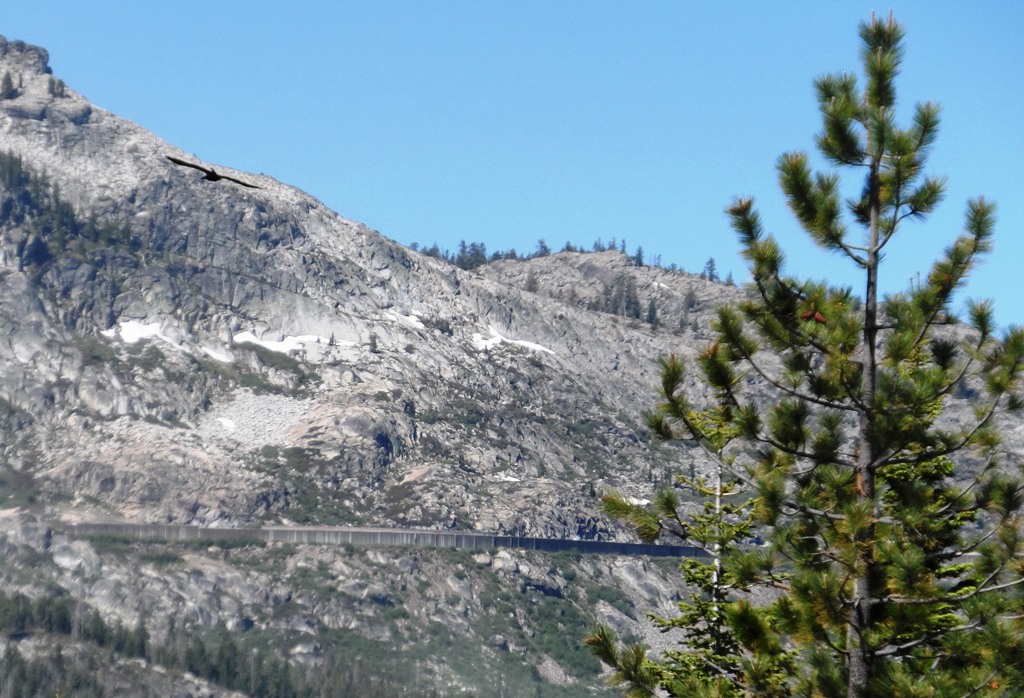
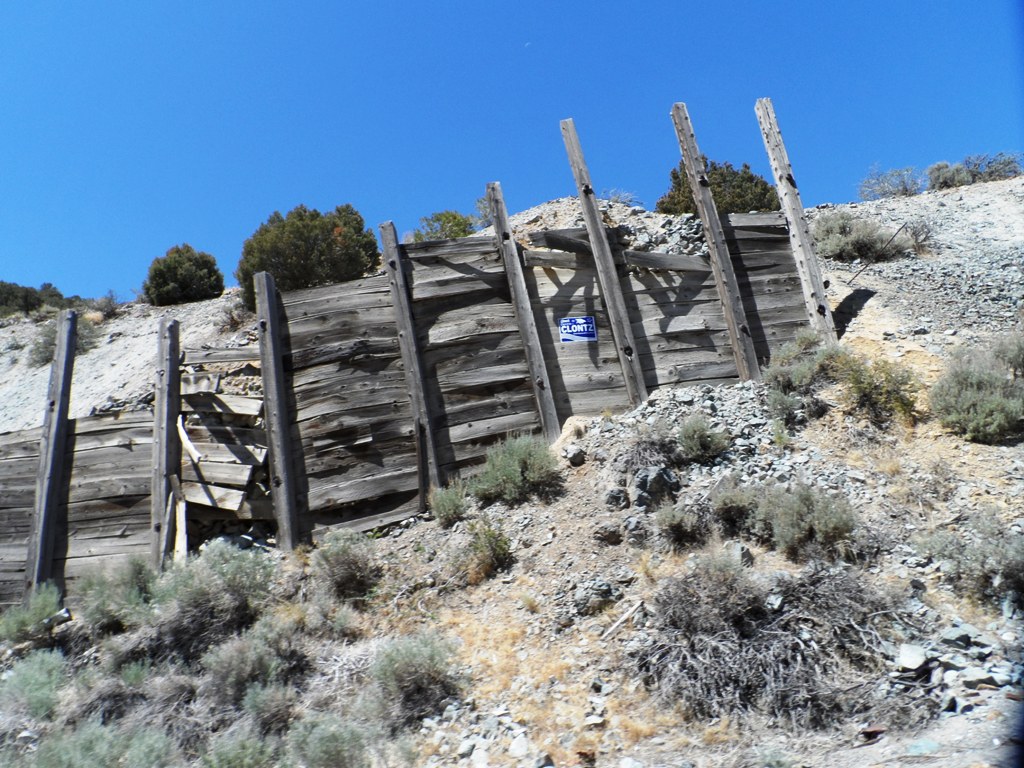
The first "super highway" over these mountains was built by the Central Pacific Railroad who finally crossed the mountain in 1868. Heavy snow was a huge problem and constantly blocked the rail line, so the railroad built a series of snowsheds, which are essentially wooden tunnels for the trains to run through. Much to Rick's joy, there are still a number of the sheds in use, which can be seen in the distance on the side of the mountain. 

 When we crossed into California, we thought about the many prospectors who followed this same path (only on foot and in wagons) during the Gold Rush of 1849.  We were happy to cross the summit and head down the long grade toward Sacramento.

 Hmmm .... Looks like the rumors of traffic jams in California were quite true! We a bit surprised to see so much traffic on a weekend and could just imagine how bad it must be in rush hour. We did notice the temperature outside had skyrocketed - from about 72 in Reno to 101 in Sacramento. Wow- we turned on the generator and air conditioner and life was great.

 We went through Sacramento and finally cleared the traffic, only to hit traffic again as we passed north of San Francisco Bay. I would guess the traffic added a couple hours to our trip, but compared to the 49'ers who came in the old days, we had little to complain about.

Finally, we got to our RV site and found a beautiful, cool park -- the temperature was now down to about 68. It was amazing to see these temperature variations in a hundred miles or so.

Tuesday, June 19, 2012

The National Automobile Museum in Sparks, NV

 The National Automobile Museum was established from Bill Harrah's personal automobile collection after his death in 1978.

 The museum has an incredible collection of cars ranging from before 1900 to recent times. One remarkable part of the collection is that the cars are restored to factory condition -- as was required by Mr. Harrah when he developed the collection.
 This 1899 Locomobile was one of the earliest cars of the collection and shows how the very early automobile was closely related to a horse drawn buggy.

 This Stutz Bearcat was the Corvette of the early 1920's and was in perfect condition. With no windshield, getting bugs in your teeth was all part of the fun.

 Rick was in his glory in this place! He loved the early cars and could not believe the level of restoration that must have been involved in the display of these cars.

 Rick got his wish to try out an early Ford! He was surprised to find how small the car was - barely able to fit two folks in the front seat. He decided that he probably would prefer to drive his 2010 Buick instead!

 Here is a rare car -- the 1923 copper cooled Chevrolet. This was Chevy's first air cooled car and was a disaster. Unfortunately, the first 500 cars built performed so poorly that Chevy re-purchased (almost) all of the cars sold and replaced them with regular Chevrolets.  This car represents one of two of thecooper cooled Chevys' still in existence. The other, ironically, is in the Henry Ford Museum as Mr. Ford refused to return it to Chevrolet after he purchased it.

 Orinda liked this 1934 Chrysler Airflow sedan. While this car had great performance for the time, the public did not accept the advanced styling and the car did not sell well.

 Coming from the Airflow, we moved to this 812 supercharged Cord from 1936. Wow - what a car. This front wheel drive probably represented the high water mark in the automotive world for some time.

 Even the lower level cars looked great, as this 1939 Plymouth shows. Again, this car was perfectly restored and looked like it just came off the show room floor.


 Here is one of Rick's favorites -- a 1966 VW beetle! Rick has restored a couple of these over the years and really liked this car. Orinda laughed as Rick suggested he get another VW! Looks like a tough sell!

 Here is perhaps the rarest car of all -- a 1907 Thomas Flyer and winner of the New York to Paris automobile race. This famous race actually went from New York, across the USA, to Russia, then Europe and on to Paris. After 169 days, this car was the winner. Imagine the lack of roads, weather, and problems that must have been involved. It was very cool to see the actual car from 105 years ago!

Finally, here is a true, 24k gold plated car. This 1981 Deloran was marketed by American Express in their Christmas Catalog for $85,000 - and two vehicles were sold (and this is one of them). It was said that insurance rates were some $1,000 a month since even a door ding could cost thousands to fix and re-plate the gold.

This museum must be one of the best auto museums anywhere and is certainly worth a stop when in the Reno/Sparks area.

The Nevada State Museum in Carson City - Nevada's Interesting History

In downtown Carson City is the Nevada State Museum, which focuses on the fascinating history of Nevada all the way back to eons in the past. This shot shows Orinda with a 14" naval gun shell from the battleship Nevada. Interestingly, these shells (and many other munitions) are stored in the United States Arsenal located in Hawthorne, NV. 

 One of the first displays focused on the history of slot machines, which is certainly not a surprise in Nevada! We learned that many of the slot machines were developed by Mr. Charles Fey. Fey invented the first machine that could actually pay out coins and to use spinning reels. The machines shown here were built in the late 1800's.


 Gambling has played an important role in Nevada, but before slot machines, mining was the big ticket. Carson City was particularly important since Virginia City provided literally tons of silver. 

One of the big problems with mining in the Virginia City area was that the soil was not stable and cave-ins were frequentPhilip Deidesheimer was a mining engineer who came up with the idea of the "square set" timber structure, seen above. This allowed mines to be dug deeper - down to thousands of feet. 

One of the very cool features of the State Museum is that the mining section of the museum is set up just like a real mine. Rick was very impressed with this and enjoyed exploring the "mine". Orinda did not like the closed area and decided to meet Rick a bit later. 

The exit for the "mine" came out in an antique firearms display. Rick is leaning on a Gatling gun from the late 1800's. There was quite a variety of arms from the early days of Nevada including a number of small, concealed guns used by gamblers of the period. 

Since the Comstock Lode was producing tons of silver and gold, the United States decided it would be great idea to build a mint in Carson City to mint coins from the preciousness metal. The mint operated from 1869 to 1899 and pressed both gold and silver coins. Today, the State Museum is housed in the old Mint building and this was the first press used by the mint.

Silver was used for many purposes, including this spectacular silver service used on the battleship Nevada -- which served in both WW I and WW II. In fact, the Nevada was the only ship at both Pearl Harbor and the D-Day invasion of Europe. Orinda thought this would look great in the motorhome!

 Long before Nevada was a state, the area was home to a wide range of animals, including this fossil of a huge fish, as Nevada was covered by a large inland sea.

The fossil was recreated above and is a very fearsome fish indeed. I would hate to see this guy at the end of my line!

We enjoyed the Nevada State Museum and learned quite a bit about the state and the area. This was a worthwhile stop. 

Monday, June 18, 2012

A trip to the past - Virginia City, Nevada, Home of the Comstock Lode


 Located just a few miles away from Carson City where we were getting some work done on our refrigerator is the historic landmark called Virginia City. We had heard of Virginia City as the famous mining town and home to the fabulous silver mine called the Comstock Lode. Of course, it was also famous as a result of the Bonanza TV show.

Driving from Carson City to Virginia City is only about 7 miles, but involves quite a climb! It is a rare day to climb a 15% grade and Rick was glad he did not have the motorhome on this trip!

Along the drive, we found increasing evidence of old mining activity. Apparently this whole area was heavily (and successfully) mined.


Orinda inspects one of the old mining frames that came from the Comstock and was re-erected as a visitor center in Virginia City. The head frame was used to hoist a mining cage up and down a mine shaft carrying miners into the mine. This frame dates from the early 1900's.

This mining head is still installed in a mine, but did not appear to be used. There is still mining being done in the area, but it looked like tourism is now the big business. 
 
 Naturally, Rick would find a railroad, even in Virginia City! The Virginia and Truckee railroad was an engineering marvel and ran from Carson City to Virginia City.
 At the height of the boom, over 40 trains a day ran on the rails and carried silver down to Carson City and miners up to Virginia City. Amazing.


 Today, the main street is a bustling tourist attraction, but you can still imagine the heyday of the silver boom which occurred in the mid to late 1800's. The Comstock Lode was a 2.5 mile vein of high grade silver and gold. This produced several hundred million dollars of ore (a huge sum in the 1800's!). During this time, Virginia City was the leading town in the west.

 This building gives an idea as to the prosperity of the city -- it was the elementary school for Virginia City! Now restored, it is easy to imagine the city in it's prime. The silver mined here had tremendous influence and led to statehood for Nevada and the creation of a United States Mint in Carson City.